Honeysuckle Palooza
For more information please visit one of these links:
Dayton Hikers Meetup:
https://meetu.ps/e/Pvhl4/SwR5/i
Facebook Event:
https://www.facebook.com/share/181MXJ2jnJ/
Beaver Creek Wetlands Association Website:
https://beavercreekwetlands.org/event/honeysuckle-palooza-2/
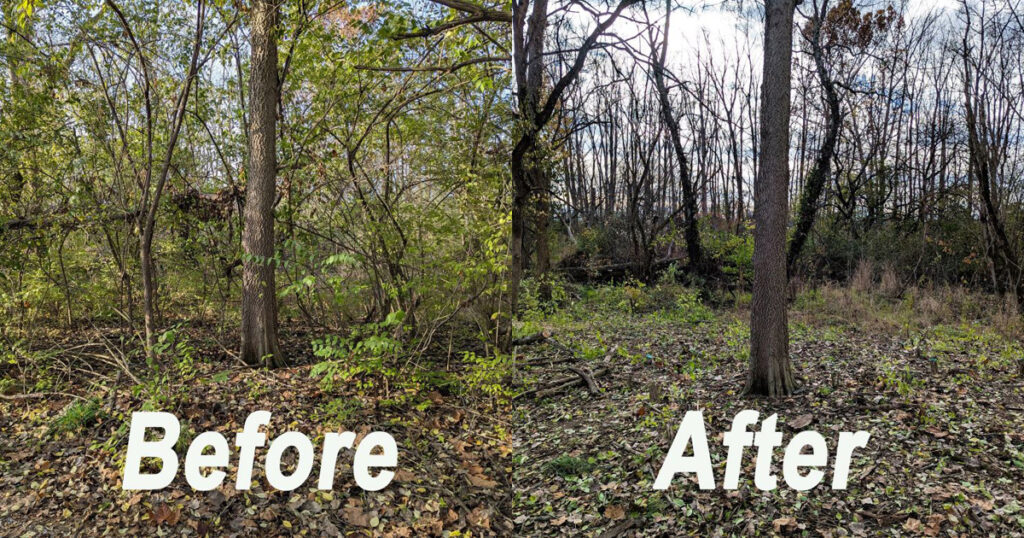
Invasive honeysuckles in Ohio are a significant problem because they outcompete native plants by leafing out early and creating dense thickets, which can alter habitats and negatively impact wildlife. The main species are Amur, Morrow, and Tatarian honeysuckle, and they are widespread, especially along roadsides and forest edges. While birds eat their berries, the fruit provides poor nutrition for the birds and helps spread the invasive seeds further.
Ecological impact
- Shade out native plants: Invasive honeysuckles leaf out in early spring and retain leaves late into the fall, shading out native understory plants and preventing them from getting the sunlight they need to grow.
- Form dense thickets: They can form dense, stands that leave no room for other vegetation, creating virtually useless habitat for wildlife.
- Harm wildlife: The berries provide poor nutrition, and while birds eat them and spread the seeds, they lack the nutrients that many native birds need. This can negatively impact migratory and other bird populations.
- Alter soil: They can change the soil chemistry and alter light availability, changing the entire ecosystem over time.
- Impact water quality: In the Ohio River Watershed, invasive honeysuckle can lead to soil erosion, increased sedimentation in waterways, and depletion of soil moisture and nutrients.
Fact: Invasive honeysuckle plants in Ohio use more water than native plants by outcompeting them for water and nutrients, and through higher rates of moisture loss from their leaves. Studies have shown that honeysuckle loses moisture more significantly than native plants through transpiration, which can lower available water in ponds and streams.